

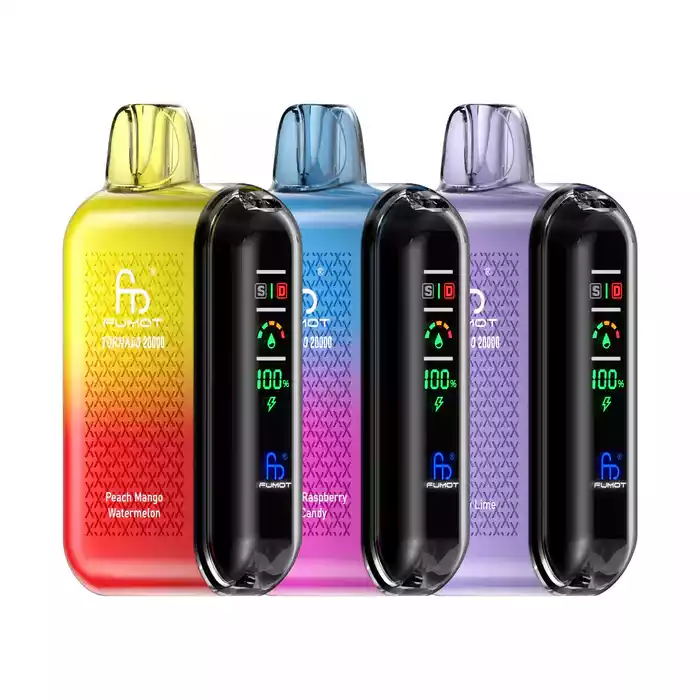
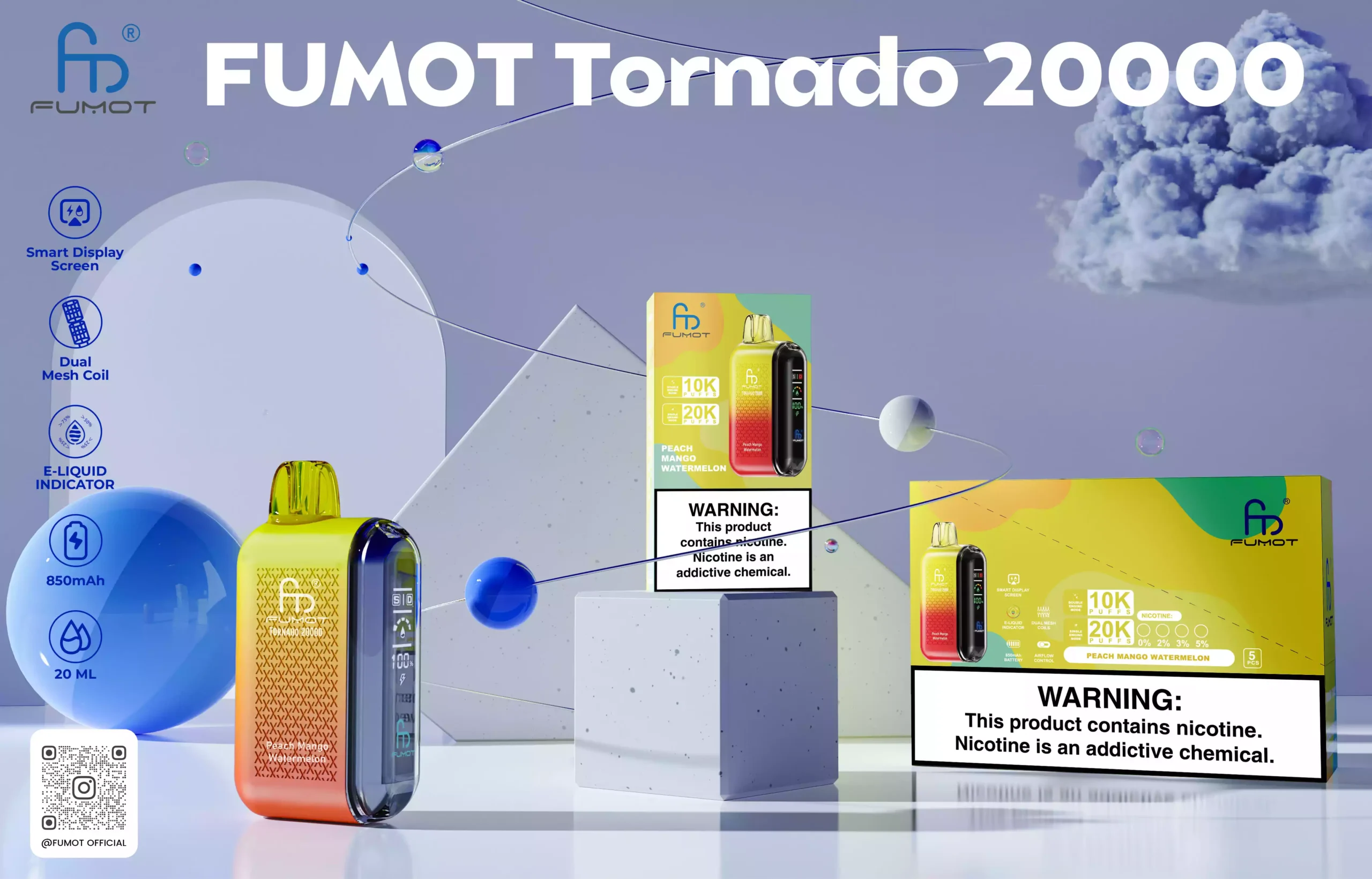
Walk through a music festival at night and you’ll notice something glowing between the strobes and the phone screens. It isn’t a drink, and it’s not a glow stick either. More often than not, it’s a disposable e-cigarette—bright, transparent, sometimes pulsing like a toy from the future. The devices in the Fumot RandM Tornado 20000 line are a perfect example. They’re not subtle, and that’s the point.
So, why the obsession with these loud designs? Why do so many young consumers want their nicotine wrapped in neon plastic instead of something discreet?
The Aesthetic Shift
Cigarettes were once symbols of cool. Think black-and-white photos of movie stars holding slim white sticks. That era is gone. What replaces it is not elegance but spectacle. With e-cigarettes, the function is almost secondary; the look is the hook.
A transparent case gives you a glimpse of the inner mechanism—tiny wires, juice reservoirs, even the chipboard. Add a set of LED lights that flicker with every puff, and suddenly you’re holding something that feels closer to a gaming accessory than a cigarette. For a generation raised on RGB keyboards and glowing PC towers, this is familiar territory.
Fashion Disguised as Nicotine
Young people rarely describe their devices as medical substitutes for smoking. Instead, they treat them like part of their wardrobe. The neon vape sits next to sneakers, headphones, and a phone case. It’s a detail, a piece of everyday style.
This explains why some brands lean so heavily on outrageous packaging: cartoon fruit, candy-colored shells, even holographic boxes. It’s less about the taste inside and more about the social message outside. When your vape looks like a collectible, you carry it differently—you show it, not hide it.
Social Media Makes Everything Louder
There’s also the performance angle. A regular cigarette does nothing on camera; it burns down silently. A glowing vape, however, transforms into a mini light show. It looks good in a selfie, better in a club video, and even better when you slow it down and sync it to music.
Platforms like TikTok amplify this aesthetic. A single clip of someone exhaling vapor under flashing LEDs can rack up thousands of views. The device becomes content. And once a product becomes content, it sells itself.
Psychology in Play
It’s tempting to reduce all this to shallow vanity, but the pull goes deeper.
-
Identity: Young users pick designs that match their personal image—flashy if they want attention, sleek if they prefer subtlety.
-
Sensation: Lights and colors add an extra layer of stimulation, turning each puff into a small event.
-
Recognition: When your vape stands out, so do you. In crowded spaces, attention is a kind of currency.
In short, design transforms a private habit into a public signal.
A Shift From “Health” to “Culture”
It’s worth remembering that e-cigarettes entered the market promising a healthier alternative to smoking. But step into today’s vape shop or scroll through product catalogs, and that framing feels secondary. The pitch now sounds closer to lifestyle electronics.
This drift is telling. What was once a “nicotine delivery system” is being rebranded, intentionally or not, into a pocket-sized cultural accessory. It’s the same logic that turns sneakers into status symbols or headphones into fashion statements.
So What Does It All Mean?
If young people are buying glowing vapes not only for nicotine but for style, then the conversation about vaping has to move beyond health statistics. We’re also talking about design trends, youth identity, and the way consumer products slide into culture.
It raises a provocative question: as e-cigarettes grow flashier, will they continue to be framed as a public health issue, or will they morph into something closer to wearable tech—a glowing gadget that just happens to deliver nicotine?
Closing Thought
The fascination with neon and transparency may look shallow from the outside, but in reality it reflects how younger generations approach objects. Function matters, but form often wins. A vape isn’t just a nicotine fix anymore. It’s a tiny stage light, a fashion piece, a way to be seen. And in a world that increasingly lives both offline and online at the same time, being seen may matter more than anything else.